By Brittany McLendon, Senior Content Writer
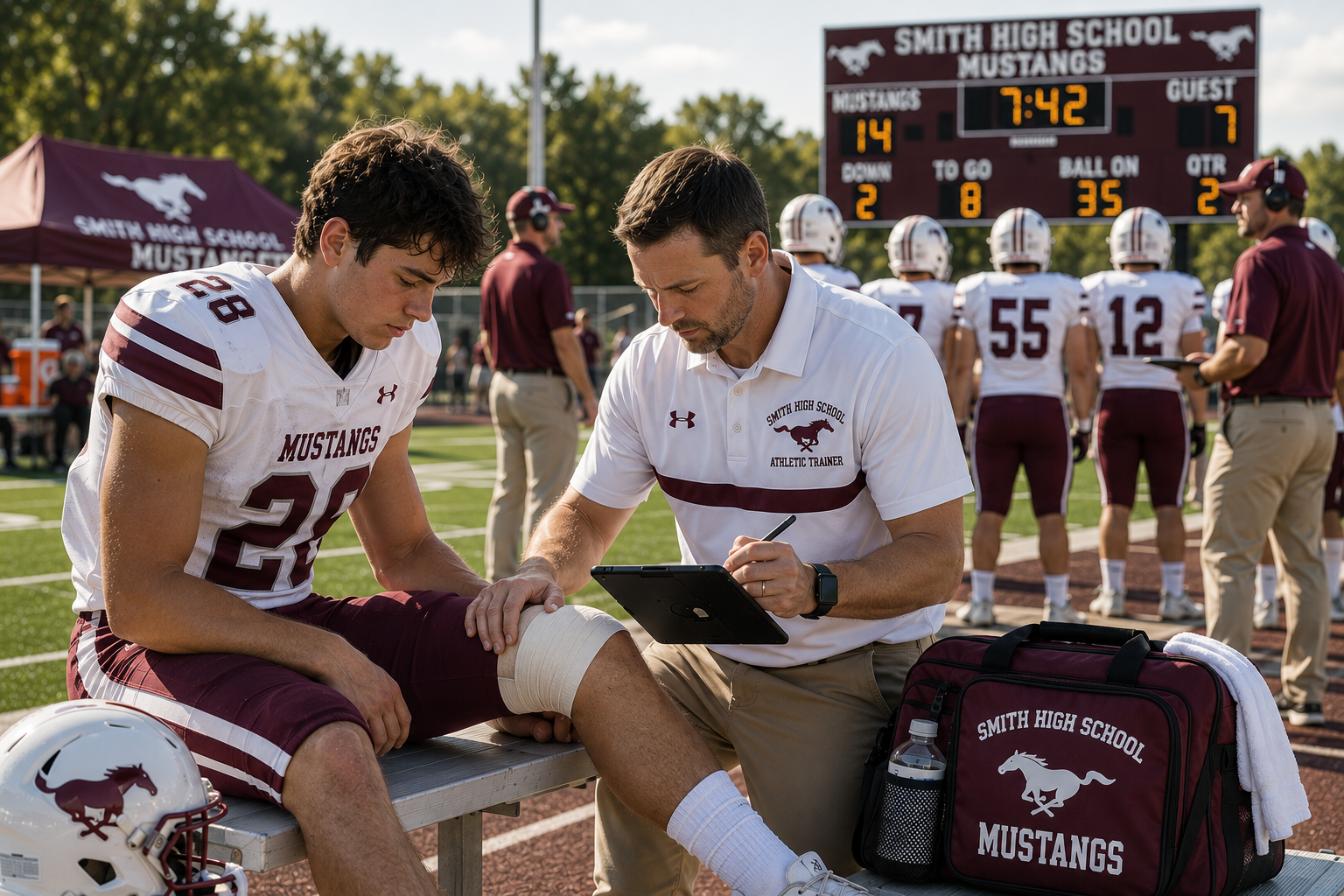
A student athlete gets injured during practice.
The athletic trainer documents the injury. The coach needs an update before the next game. A parent emails new medical paperwork. Eligibility status is stored somewhere else. Return-to-play notes live in another system entirely.
Meanwhile, someone is manually updating spreadsheets to keep everyone aligned.
For many schools, injury tracking isn’t failing because people aren’t doing the work. It’s failing because the information lives in too many places.
That fragmentation creates extra administrative work, inconsistent communication, and gaps in visibility that schools can’t afford.
The problem isn’t simply tracking injuries. It’s managing athlete information across disconnected systems.
Why Does Injury Tracking Become So Difficult for Schools?
Most schools don’t intentionally create fragmented workflows. The process usually develops over time.
One system handles registration. Another stores physicals. Coaches rely on email updates. Athletic trainers maintain separate records. Eligibility tracking happens somewhere else. Staff members create spreadsheets to fill in the gaps.
Eventually, injury management becomes a patchwork process built around follow-up instead of visibility.
That creates operational problems quickly:
- Coaches don’t always see the latest athlete status
- Athletic trainers spend time repeating updates
- Parents submit information through disconnected channels
- Return-to-play tracking becomes manual
- Staff members rely on emails, texts, or spreadsheets to stay aligned
The more systems involved, the harder it becomes to maintain consistent athlete records.
And in schools, inconsistent information creates more than administrative frustration.
It creates risk.
Why Is Visibility So Important in Athletic Injury Management?
Injury tracking affects far more than medical documentation.
It impacts:
- athlete participation
- eligibility
- communication
- supervision
- compliance
- operational accountability
When injury information lives outside the rest of the athletic workflow, visibility breaks down across departments.
A coach may not know an athlete’s updated status. A trainer may need to resend documentation. An administrator may not have immediate access to the latest records during an eligibility review.
The issue is rarely a lack of information.
The issue is that the information is disconnected.
Schools need staff members working from the same athlete record—not separate versions of it.
That’s especially important when athletic departments are managing hundreds or thousands of student athletes across multiple sports, seasons, and campuses.
What Does Connected Injury Tracking Actually Look Like?
Connected injury tracking removes the need to manage athlete information across separate systems.
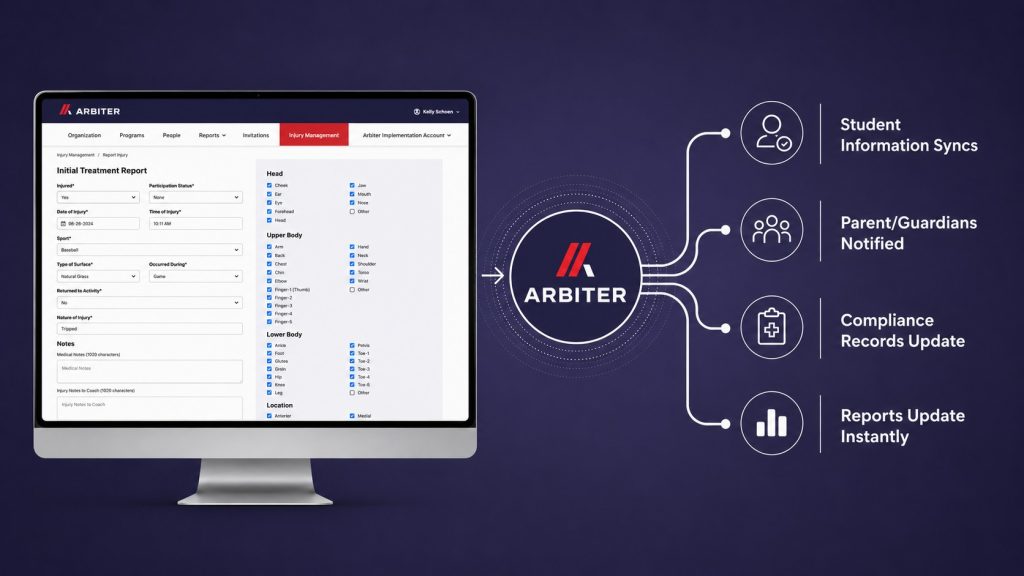
Instead of creating duplicate records or manually syncing updates, schools manage injuries within the same workflow already used for registration, eligibility, and athlete records.
That changes the day-to-day experience for athletic departments significantly.
Log Injuries Without Re-Entering Athlete Information
When athlete information already exists inside registration, staff don’t need to rebuild profiles or enter the same data multiple times.
Injury records connect directly to the student athlete already in the system.
That reduces:
- duplicate work
- inconsistent records
- manual updates
- administrative overhead
It also helps ensure everyone is referencing the same information.
Track Treatment and Return-to-Play Status in One Place
One of the biggest operational challenges schools face is maintaining visibility after the initial injury is recorded.
Status updates, treatment progress, and return-to-play documentation often become scattered across emails, forms, or spreadsheets.
A connected system centralizes those updates.
Instead of chasing information across multiple tools, athletic staff can monitor athlete status, update records, and review progress from one location.
That creates a clearer workflow for trainers, coaches, administrators, and parents.
Keep Coaches, Parents, and Staff Aligned
Disconnected systems create communication gaps.
When updates rely on emails, texts, or manual follow-up, consistency becomes difficult to maintain—especially across larger athletic programs.
Connected injury tracking helps schools communicate from the same source of information.
Coaches can access updated statuses. Parents stay informed. Athletic trainers spend less time repeating updates across separate systems.
The goal isn’t simply faster communication.
It’s more reliable communication.
Access Athlete Records From Anywhere
Athletic programs don’t operate from a single desk.
Coaches are traveling. Trainers are working events. Administrators are moving between campuses and facilities.
Schools need access to athlete information wherever work is happening.
Mobile access and centralized records help staff quickly review injury status, documentation, and athlete information without relying on paper files or disconnected spreadsheets.
That improves both efficiency and responsiveness during day-to-day operations.
Why Do Connected Systems Matter More for Schools?
Schools don’t just need digital tools.
They need operational continuity.
That’s why standalone systems often create long-term friction. Every disconnected workflow introduces another place where information can become outdated, duplicated, or incomplete.
Connected systems reduce those gaps by keeping athlete information aligned across the broader athletic workflow.
When registration, eligibility, communication, physicals, and injury tracking work together, schools gain:
- better visibility
- fewer manual processes
- more consistent records
- stronger operational control
The advantage isn’t simply digital injury tracking.
It’s having injury information connected to the rest of the student athlete lifecycle.
That’s what helps schools operate with more confidence and less administrative complexity.
What Are the Signs Your Injury Tracking Process Is Breaking Down?
Many schools don’t realize how fragmented their process has become until the inefficiencies start piling up.
Here are a few common warning signs:
- Coaches rely on emails or texts for injury updates
- Injury status is tracked in spreadsheets
- Athlete records must be updated in multiple systems
- Return-to-play tracking depends on manual follow-up
- Staff members don’t all see the same information
- Physicals, eligibility, and injury records live separately
- Parents submit updates through disconnected channels
If any of those workflows sound familiar, the issue may not be staffing or process discipline.
It may be system fragmentation.
Stop managing disconnected systems.
Schools are bringing their athletic operations into one platform.
Schools Don’t Need Another Standalone Tool
Athletic departments already manage enough disconnected workflows.
Adding another isolated system often creates more administrative work—not less.
Injury tracking works best when it’s connected to the systems schools already rely on for athlete registration, eligibility, communication, and operational oversight.
Because the real goal isn’t simply documenting injuries.
It’s giving schools one trusted place to manage athlete information clearly, consistently, and without the extra steps.
See How Schools Track Injuries Without Switching Systems
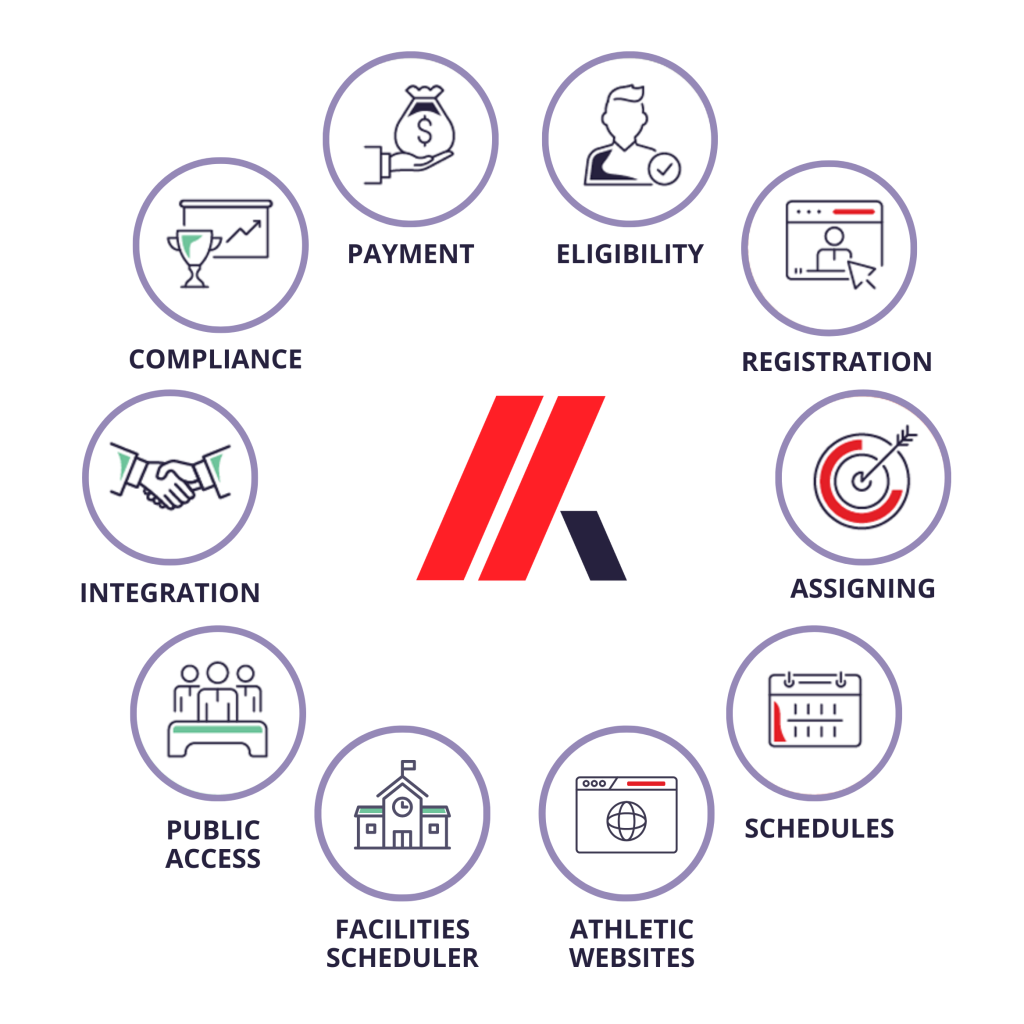
Arbiter Registration connects athlete records, eligibility, communication, and injury tracking in one workflow.
About the Author
Brittany taught high school English for six years. She’s passionate about helping schools simplify operations so both staff and students can thrive.