
By Zane Zientak, Senior Product Manager
Updated January 2026
Google Calendars are great for meetings.
They were never designed to run a school district’s facilities — or function as true K-12 facilities scheduling software.
Yet across K–12, districts rely on shared calendars to manage gyms, auditoriums, fields, cafeterias, and multipurpose spaces — often across multiple schools, departments, and approval layers.
When problems show up, the blame usually lands on people:
- “Someone forgot to update the calendar.”
- “They didn’t tell facilities.”
- “We’ve always done it this way.”
The truth is simpler — and more uncomfortable:
The system breaks before the people do.
Fragmented Calendars ≠ Visibility
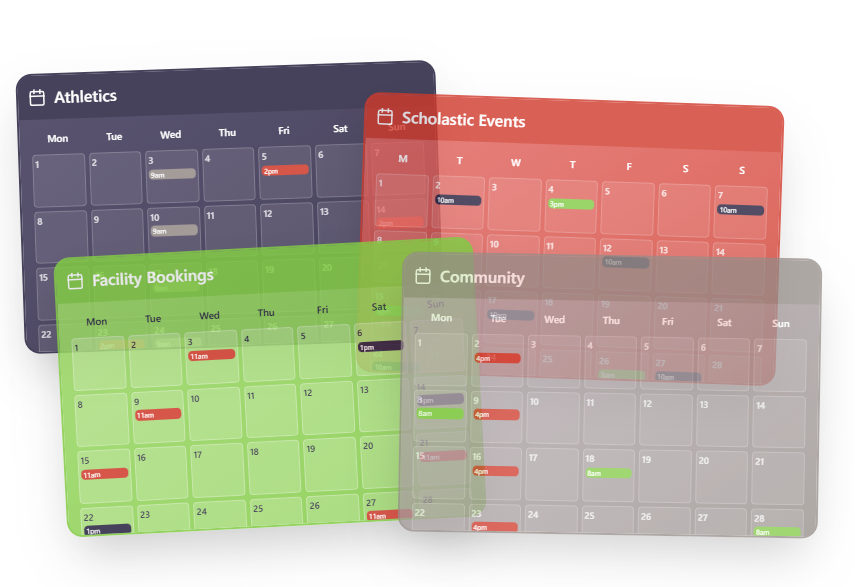
Most districts don’t operate with a single facilities calendar — even if they believe they do.
Athletics maintains one view.
Buildings & grounds maintain another.
Performing arts, principals, and outside groups often manage their own versions entirely.
Each calendar feels complete in isolation.
None of them reflect the full reality of how spaces are being used.
What looks like visibility is actually fragmentation.
People assume that because an event exists somewhere, it’s been accounted for everywhere. That assumption is what creates conflicts, last-minute surprises, and frustrated teams.
The issue isn’t missing information — it’s scattered information.
Fragmented calendars create awareness without context. And context is what operations actually run on.
Visibility ≠ Authority
Even when someone can see what’s scheduled, that doesn’t mean they can act on it.
Common reality:
- Facilities can see an event — but can’t approve or deny it
- Principals create events without knowing conflicts exist
- Athletics adjusts schedules without downstream updates
Seeing something doesn’t mean owning it.
Without defined authority:
- Conflicts are discovered late
- Decisions get escalated informally
- Accountability becomes unclear
Authority ≠ Accountability
In Google Calendars:
- Anyone can create
- Anyone can edit
- No one truly owns the outcome
There’s no built-in:
- approval trail
- accountability chain
- audit history
So when something goes wrong, the system can’t answer:
- Who approved this?
- When was it changed?
- Who was notified?
That’s not a training issue.
That’s a tooling gap.
Why “We’ve Always Done It This Way” Eventually Breaks
Google Calendars don’t fail immediately. They fail gradually.
They work when facilities usage is light, schedules are predictable, and coordination happens among a small group of people who know each other well. As districts grow, share spaces more frequently, and operate with leaner staff, that informal coordination becomes invisible labor.
Invisible labor is fragile.
It depends on people remembering, double-checking, and filling gaps the system was never designed to handle. Eventually, that breaks — usually at the worst possible moment, and usually in a way that feels personal even though it isn’t.
What Changes with a Purpose-Built Facilities Scheduler
A facilities scheduling system isn’t just “a better calendar.”
It introduces structure where shared calendars can’t:
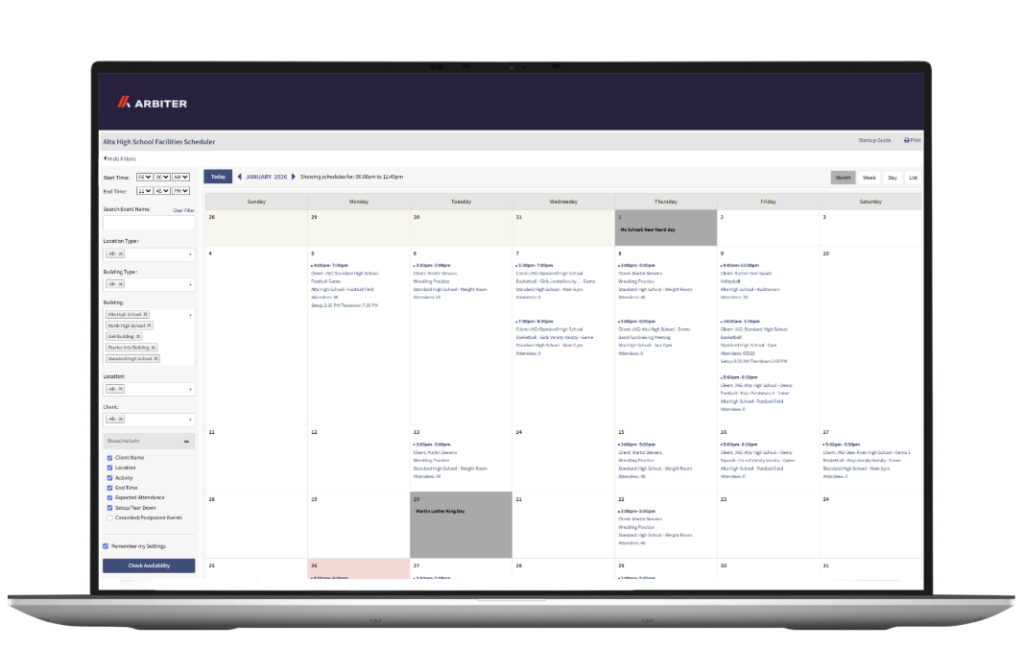
- One authoritative source of truth for facility usage
- Defined approval workflows by location and requester type
- Conflict prevention, not conflict cleanup
- Clear ownership of decisions
- Automatic notifications when changes happen
- Auditability when questions arise
For many districts, the shift starts small — often with athletics — and expands once the value becomes visible.
Not because leadership wanted new software.
But because the old system could no longer support how the district actually operates.
The Bottom Line
If your facilities process depends on people “remembering to check the calendar,” the problem isn’t discipline.
It’s design.
Google Calendars weren’t built to manage facilities. Districts don’t need another calendar — they need a facility scheduling system built for K-12 operations, not meetings.
And districts don’t fail because they outgrow shared calendars — they fail because they rely on them for work they were never meant to do.
Want to see what authority, approvals, and accountability actually look like in practice?
[See how Arbiter Facilities Scheduler works →]
About the Author
With over a decade at Arbiter, Zane Zientek combines his K–12 and officiating experience to tackle the everyday challenges schools face on and off the field.